


More than half a million homes and businesses across seven states were left without power after a winter storm swept across parts of the U.S. Northeast on Sunday and Monday. Massachusetts-based Eversource Energy (NYSE:ES) was the hardest-hit utility after 135,797 of its 3.3 million customers were left in the dark, while Ohio’s FirstEnergy Corp. (NYSE:FE) saw 81,257 of its 6.2 million U.S. customers affected.
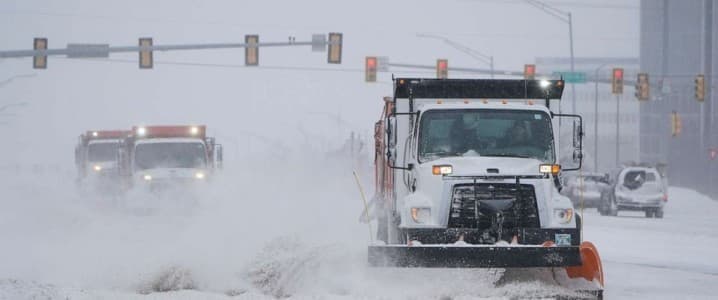
A massive historic winter storm is currently lashing the U.S. Northeast and Mid-Atlantic. The storm has triggered blizzard warnings for over 40 million people stretching from Maryland to Maine, bringing “near impossible” travel conditions and widespread power outages. Winds are gusting over 70 mph, creating whiteout conditions that make visibility less than a quarter mile. The storm has also brought life-threatening wind chills, with forecasts as low as -50°F in the Northern Plains.
Parts of the Northeast have already seen over 22 inches of snow; New York City’s Central Park has recorded more than 15 inches, with officials warning it could rank among the city’s 10 worst storms in 150 years. A non-essential travel ban is in effect in New York City, with similar restrictions and states of emergency having been declared in New Jersey, Rhode Island, Pennsylvania and Connecticut. More than 5,500 flights into or out of the U.S. have been cancelled today, with JFK, LaGuardia, Newark, Boston Logan and Philadelphia International the hardest hit.
More than half a million homes and businesses across seven states were left without power after a winter storm swept across parts of the U.S. Northeast on Sunday and Monday. Massachusetts-based Eversource Energy (NYSE:ES) was the hardest-hit utility after 135,797 of its 3.3 million customers were left in the dark, while Ohio’s FirstEnergy Corp. (NYSE:FE) saw 81,257 of its 6.2 million U.S. customers affected.
Eversource said restoration in parts of Connecticut and Massachusetts could take multiple days depending on continued wind exposure and the scale of damage assessments. The company activated mutual assistance agreements and brought in outside crews to accelerate repairs. Utilities typically suspend non-critical capital work during major storm events and redirect all available personnel toward outage response, which increases short-term operating expenses.
The storm also comes during peak winter heating demand, when electric load and natural gas consumption are already elevated. Gas-fired plants across the region have been running at high utilization rates to support heating demand, placing added emphasis on distribution reliability at the local level.